You scrub it off. You spray it with the strongest cleaner you can find. You rinse, dry, and walk away satisfied — only to find it creeping back along the grout lines two weeks later. If bathroom mould feels like a battle you can never quite win, you are not alone. Across homes throughout Western Australia, this is one of the most frustrating and persistent household problems homeowners face.
The reason mould keeps returning is rarely about how hard you clean. It is almost always about underlying conditions that have never been properly addressed. At Elite Sealed WA, we specialise in waterproofing and sealing solutions that tackle the root causes rather than just the symptoms. In this blog, we break down exactly why bathroom mould keeps coming back — and, more importantly, what it takes to stop it for good.
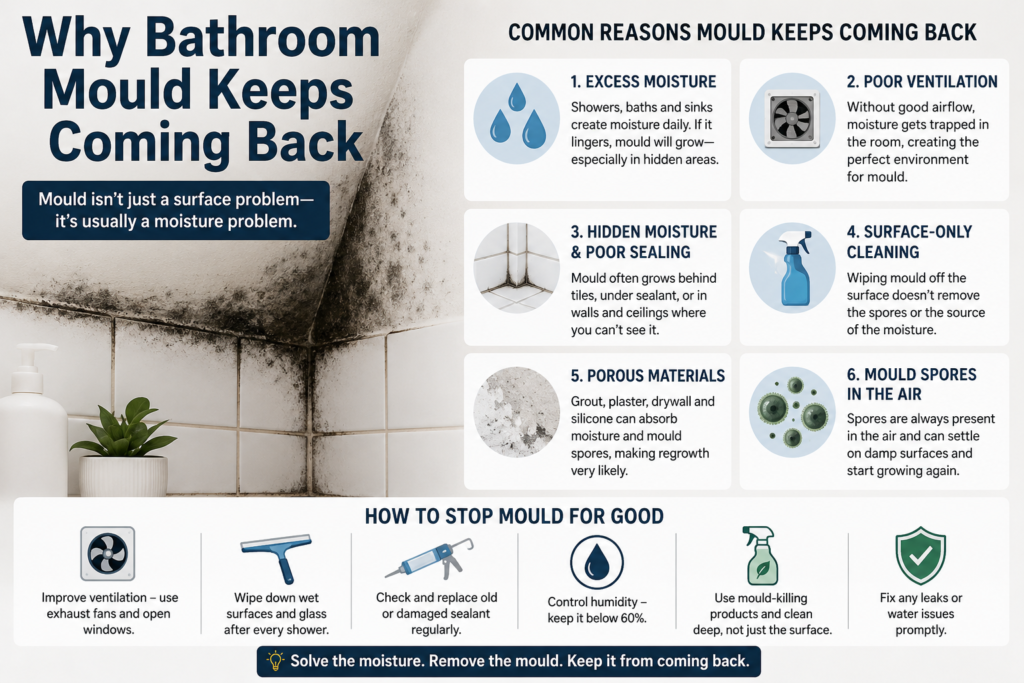
Moisture Is the Real Problem — Not Dirt
Mould is not a cleanliness issue — it is a moisture issue. Mould spores exist naturally in the air around us at all times. They only become a problem when they land on a surface that offers them what they need to thrive: warmth, moisture, and organic material (such as soap residue, skin cells, or grout).
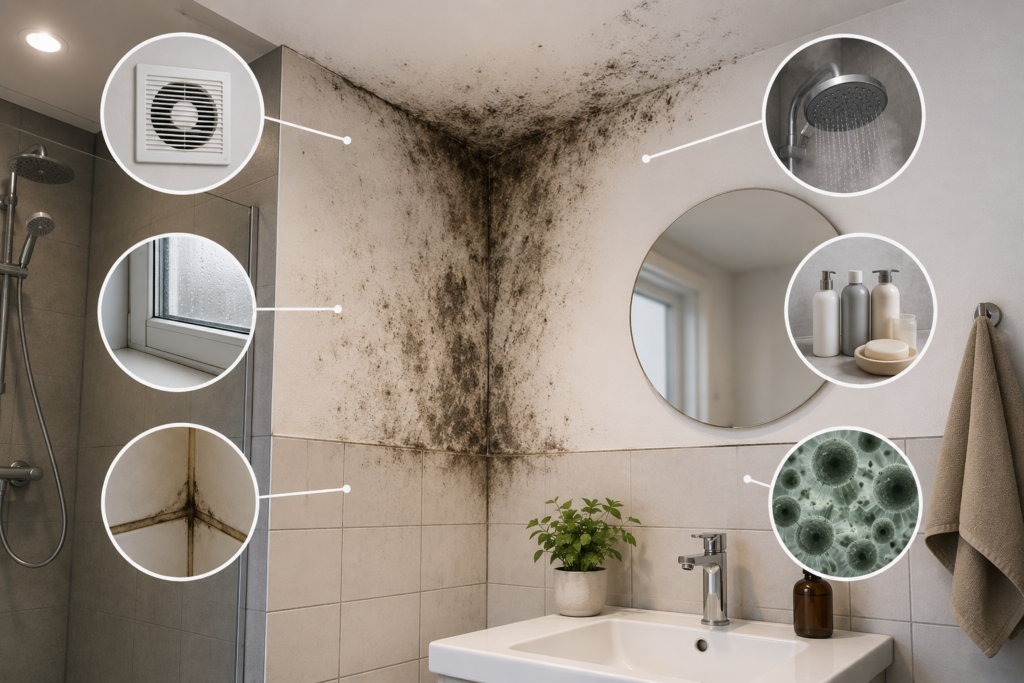
Bathrooms are naturally high-humidity environments. Every shower or bath you take sends warm moisture into the air, where it settles on walls, ceilings, grout, silicone, and any porous surface it can find. If your bathroom does not dry out effectively between uses, that moisture lingers — and lingering moisture is an open invitation for mould.
Surface cleaning removes the visible mould colony, but it does not remove the moisture conditions that allowed it to grow. Without addressing the underlying dampness, regrowth is inevitable
Failed or Ageing Silicone and Grout Seals
One of the most overlooked causes of recurring mould is deteriorating silicone sealant and grout. These materials are the frontline defence between your tiles and the substrate beneath — and when they fail, water infiltrates deep into the wall cavity or subfloor.
Signs that your seals may have failed:
- Silicone that has turned black, pink, or brown and does not clean up
- Cracked, crumbling, or missing grout lines
- Tiles that feel hollow or loose when tapped
- Mould that reappears within days of cleaning
- Damp or soft walls and floors adjacent to wet areas
- Paint bubbling or peeling on the other side of a bathroom wall
Once water is getting behind your tiles, no amount of surface cleaning will solve the problem. The mould you see on the surface is simply the visible sign of a much larger moisture problem hidden behind your walls.
Inadequate Ventilation
Poor ventilation is a leading contributor to chronic bathroom mould. Without adequate airflow, steam from showers has nowhere to go. It condenses on every available surface — tiles, mirrors, ceilings, and painted walls — and keeps those surfaces damp for hours after you have left the room.
Many older homes in Western Australia have bathrooms that rely on a small window or a basic exhaust fan — neither of which provides sufficient air exchange for a modern family bathroom. If your exhaust fan is undersized, poorly positioned, or has not been cleaned and serviced in years, it may be doing very little to protect your bathroom.
A properly specified exhaust fan — ideally one that runs on a timer for 15 to 20 minutes after a shower — combined with a partially open window or door can dramatically reduce the moisture levels that allow mould to establish and grow.
Porous Surfaces and Unprotected Grout
Grout is inherently porous. Without a penetrating sealer applied and maintained on a regular basis, grout lines absorb moisture, soap scum, and organic debris — creating the perfect breeding ground for mould deep within the material itself.
Cleaning can remove surface mould from grout, but if the mould has penetrated into the body of the grout, cleaning alone will not eliminate it. In these cases, the affected grout typically needs to be raked out and replaced, the new grout properly sealed, and the surrounding silicone joints renewed — a job that demands professional-grade materials and application technique to be done correctly and last.
Waterproofing Membrane Failures in Wet Areas
Beneath the tiles of every shower recess and bath surround, there should be a continuous waterproofing membrane that prevents water from reaching the structure of your home. In properties built more than 15 to 20 years ago, these membranes may be nearing or past the end of their effective lifespan. In some cases — particularly in bathrooms that were tiled by unqualified tradespeople — the membrane may have been applied incorrectly or not at all.
A failed waterproofing membrane allows water to slowly saturate the substrate, timber framing, and wall cavities. This creates persistent, deep moisture that is impossible to address through any amount of surface treatment. If you are seeing mould recurring in the same locations despite cleaning and improved ventilation, a failed waterproofing membrane may be the underlying cause — and a professional inspection is essential.
The Limits of DIY Mould Treatments
Supermarket mould sprays and bleach-based cleaners have their place for routine maintenance, but they are surface treatments. They oxidise and kill the mould colony you can see, but they do not penetrate porous materials to address deep-seated growth, and they do nothing to fix the conditions that are allowing mould to return.
There is also a health consideration. Repeatedly scrubbing mould without adequate protection — and without addressing the source — exposes you and your family to mould spores on an ongoing basis. Prolonged mould exposure is associated with respiratory irritation, allergic reactions, and more serious health impacts for vulnerable individuals including the elderly, young children, and those with asthma or compromised immune systems.
If mould has been a persistent problem in your bathroom for more than a few months, it is worth having a professional assess the situation rather than continuing to apply short-term surface treatments.
How to Actually Stop Mould Coming Back
A long-term solution to bathroom mould requires addressing all the contributing factors together. The most effective approach typically involves:
- A thorough professional inspection to identify moisture entry points and membrane condition
- Removal and replacement of all failed silicone joints and damaged grout
- Application of a professional-grade waterproofing system to wet areas where required
- Sealing of grout with a penetrating, moisture-resistant sealer
- Assessment and upgrade of ventilation where needed
- Ongoing maintenance with appropriate products to preserve the integrity of seals over time
When these elements are properly addressed by qualified professionals using the right materials, the result is a bathroom that stays clean, dry, and mould-free — not just for weeks, but for years.
Tired of Mould Coming Back? Let’s Fix It Properly.
At Elite Sealed WA, we specialise in professional waterproofing, silicone replacement, grout restoration, and wet area sealing across Perth and Western Australia. We get to the root of the problem — not just the surface.