
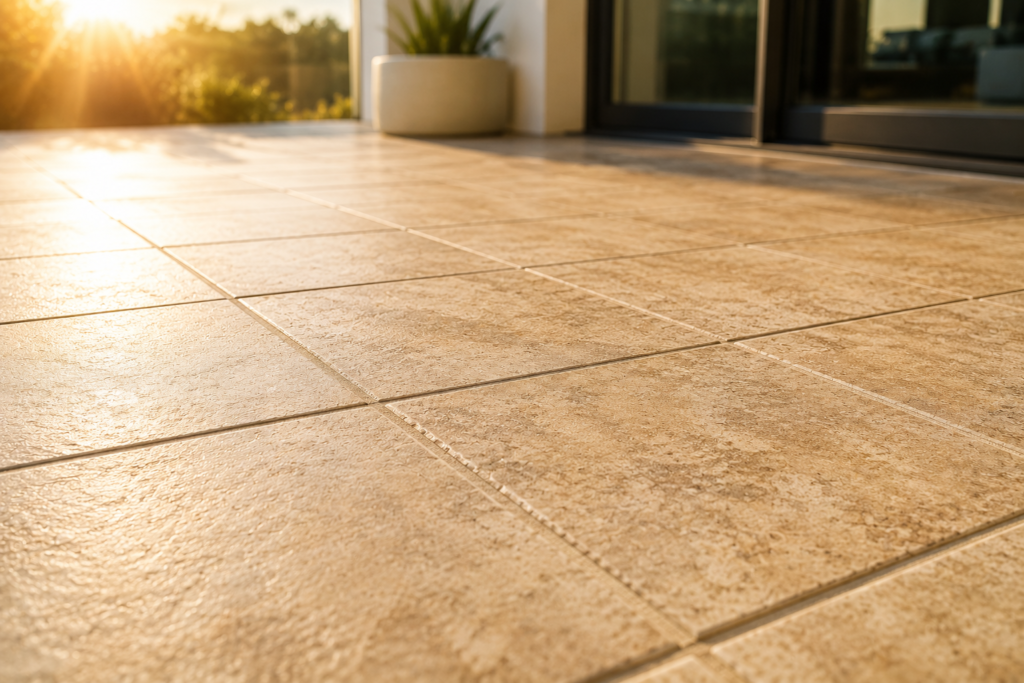
Perth is one of the sunniest cities on earth. That sunshine is a major reason people love living here — but it comes with a trade-off most homeowners don’t think about until the damage is already done. The same heat, UV exposure, and coastal humidity that makes Perth living so desirable are quietly working against the grout holding your tiles together. Understanding how the local climate accelerates grout deterioration is the first step to protecting your investment before a small maintenance issue becomes a costly repair.
Why Perth’s Climate Is Particularly Hard on Grout
Not all climates put the same strain on tiled surfaces. A property in Melbourne or Hobart experiences vastly different conditions to one in Perth or Rockingham. What makes the Perth climate especially challenging for grout is the combination of extreme heat, intense ultraviolet radiation, and — particularly for coastal suburbs — elevated humidity that can shift dramatically between seasons.
Grout is a cement-based material. It performs well when conditions are stable, but it doesn’t cope well with constant stress. When temperatures spike and drop sharply, when UV rays beat down on unshaded outdoor tiling, or when moisture sits in a warm, enclosed space, grout begins to break down in ways that are gradual but ultimately serious. The challenge is that most homeowners don’t notice the deterioration until visible cracking, staining, or moisture damage has already taken hold.
The Role of Thermal Cycling
Perth summers are notorious. Temperatures in the mid-to-high 40s are not unusual across the metropolitan area and surrounding suburbs. During the cooler months, overnight lows can drop significantly. This cycle of expansion and contraction — repeated day after day, year after year — is known as thermal cycling, and it places enormous cumulative stress on grout.
Tiles, particularly ceramic and porcelain, expand slightly in heat and contract in cooler conditions. Grout must accommodate that movement. Over time, even well-installed grout begins to develop microcracks under this constant cycle. Those tiny cracks may not be visible at first, but they provide an entry point for water, cleaning products, and debris that accelerate the breakdown further.
Worth knowing: Outdoor entertaining areas, alfresco floors, pool surrounds, and north-facing walls receive the most thermal stress in Perth homes. These are the areas where grout deterioration tends to appear first and fastest.
UV Radiation and Surface Degradation
Ultraviolet radiation is one of the most underappreciated factors in grout deterioration. Perth’s UV index regularly reaches extreme levels, particularly between October and March. While the tiles themselves are generally UV-stable, the grout between them is not immune to long-term exposure.
Prolonged UV exposure causes the compounds in grout to break down at a molecular level. This shows up as colour fading, surface brittleness, and reduced structural integrity over time. Coloured grouts — particularly darker tones used for contrast — tend to fade unevenly, leaving a patchy, aged appearance well before the grout actually fails. By the time fading becomes noticeable, the grout’s protective capacity has already been compromised.
Coastal Humidity and Salt Air
Suburbs within a few kilometres of the coast — including Cottesloe, Scarborough, Fremantle, Rockingham, and Mandurah — face an additional challenge: salt-laden air. Moisture in the air carries fine salt particles that settle on outdoor surfaces, including tiled areas. Over time, salt residue draws additional moisture into porous grout and accelerates the breakdown of cement-based materials.
Even for properties that are not directly oceanfront, Perth’s coastal climate means humidity levels can be considerably higher than inland areas. This is particularly relevant in bathrooms, laundries, and covered outdoor areas where ventilation may be limited and moisture has no easy escape route.
How Grout Deteriorates: Stage by Stage
Grout doesn’t fail all at once. It deteriorates in stages, and understanding the progression makes it easier to catch the problem before it reaches a point where more extensive repairs are necessary.
Stage One — Surface Staining and Discolouration
The first visible sign of climate-related grout wear is usually discolouration. In Perth’s warm, humid conditions, grout is highly susceptible to mould and mildew growth — particularly in bathrooms, laundries, and shaded outdoor areas. The dark staining that appears along grout lines is often not just cosmetic; it signals that moisture is being absorbed into the grout itself.
At this stage, the grout may still be structurally sound, but the surface has become porous enough to harbour organic growth. Regular cleaning can manage the appearance temporarily, but it doesn’t address the underlying change in the material’s structure. Left unchecked, surface staining progresses to deeper deterioration.
Stage Two — Cracking and Shrinkage
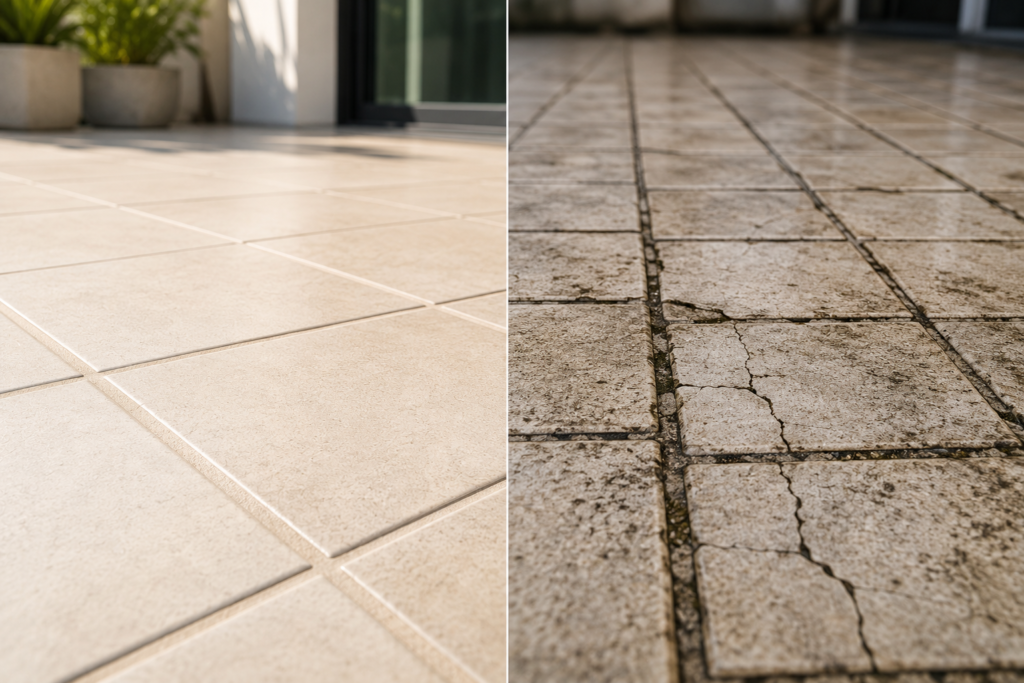
As thermal cycling and UV exposure continue to take their toll, hairline cracks begin to form along grout lines. These cracks may be barely visible under normal lighting, but they are significant. A hairline crack is wide enough to allow water to penetrate below the tile surface, particularly during Perth’s heavy winter storms when sustained water exposure is far more intense than during the dry summer months.
In tiled areas that receive significant heat exposure — such as outdoor entertaining areas or tiled pool surrounds — grout can also begin to shrink slightly as it dries out repeatedly. This shrinkage pulls the grout away from the edge of the tiles, creating gaps that become collection points for water, grit, and organic matter.
Important: Cracked or shrinking grout in wet areas like showers, bathrooms, or around pools should be assessed promptly. Water that gets behind tiles in these areas can cause significant structural damage to walls, substrates, and waterproofing membranes.
Stage Three — Crumbling and Loss
If cracking and shrinkage go unaddressed, the grout begins to physically break down. Sections become soft, crumbly, or start falling out of the joint altogether. At this stage, the tile surface has lost its protective barrier entirely in the affected areas. Water ingress is no longer a risk — it is a certainty.
The damage caused by water penetration behind tiles can extend well beyond the tiled surface itself. Moisture can compromise adhesive bonding, cause tiles to become loose, lead to subfloor rot in timber-framed homes, and create ideal conditions for mould to establish within wall cavities. What started as a grout maintenance issue has now become a much more complex and costly problem to resolve
Indoor vs Outdoor Grout: Different Risks in the Perth Climate
The way Perth’s climate affects grout is not the same across all tiled surfaces. Outdoor and indoor environments present different conditions, and it is worth understanding the specific risks associated with each.
Outdoor Tiled Areas
Alfresco floors, pool surrounds, courtyard paving, and balconies are exposed to the full force of Perth’s climate. These surfaces deal with direct sunlight, rain, temperature extremes, and in coastal areas, salt air — all simultaneously. Grout in outdoor settings typically deteriorates faster than indoor grout and requires more frequent inspection and maintenance.
Foot traffic adds another layer of wear. A heavily used alfresco area or pool deck sees grout that is not only stressed by the environment but also subjected to physical abrasion. The combination accelerates deterioration considerably, particularly in the warmer months when entertaining areas see their highest use.
Bathrooms and Wet Areas
Indoor bathrooms may seem more protected, but they carry their own climate-related challenges. Perth’s warm temperatures mean that showers and bathrooms heat up quickly and take longer to cool down and dry out. In poorly ventilated bathrooms — a common feature in older Perth homes — warm, moist air sits against tiled surfaces for extended periods after each use.
This sustained warmth and moisture is one of the primary drivers of mould growth in grout joints and one of the main reasons bathroom grout in Perth homes tends to deteriorate faster than homeowners expect. Even a bathroom that appears well-maintained on the surface can have moisture sitting behind tiles if grout integrity has been compromised.
Laundries and Outdoor Showers
Laundries and outdoor showers sit in an interesting middle ground — they are wet areas exposed to varying degrees of outdoor conditions. Grout in these spaces is susceptible to both the moisture-related challenges of wet areas and the thermal stress of areas that may be partially open to the environment. They are often overlooked during routine maintenance, which means deterioration can advance further before it is noticed.
- Outdoor entertaining floors and alfresco tiling
- Pool surrounds and spa areas
- Bathrooms with limited natural ventilation
- North-facing exterior walls with tiled cladding
- Laundries adjacent to external walls
- Outdoor showers and garden wet areas
What You Can Do to Protect Your Grout in Perth’s Climate
Understanding the climate challenges your tiling faces is only half the picture. The other half is knowing what practical steps can reduce the rate of deterioration and extend the life of your tiled surfaces.
Professional Sealing — Your First Line of Defence
Sealing is the single most effective step you can take to protect grout from Perth’s climate conditions. A professional-grade sealer penetrates the surface of the grout and reduces its porosity, limiting the amount of moisture, UV radiation, and contamination it can absorb. Sealed grout is significantly more resistant to staining, mould growth, and the early stages of thermal cycling damage.
It is important to note that sealing is not a permanent fix. Sealers do degrade over time, particularly in high-UV environments like Perth. For outdoor surfaces and heavily used wet areas, resealing every one to two years is a reasonable maintenance schedule. For indoor bathrooms with lower direct sunlight exposure, the interval may be slightly longer, but regular inspection is still important.
Ventilation in Bathrooms and Wet Areas
Improving ventilation in bathrooms and laundries is a practical step that reduces the humidity levels grout is exposed to after each use. Exhaust fans that vent directly to the outside — rather than just recirculating air within the room — make a meaningful difference. Opening windows where possible to allow cross-ventilation helps as well.
In Perth’s climate, it doesn’t take long for a warm bathroom to cool and dry properly with adequate airflow. Without it, moisture lingers and grout never fully dries between uses. Over months and years, that accumulated moisture exposure is a primary driver of mould and structural deterioration.
Regular Inspection and Early Intervention
The most cost-effective approach to grout maintenance is catching problems early. Hairline cracks and surface staining are far easier and less expensive to address than crumbling grout or water damage behind tiles. Making a habit of inspecting grout lines in high-risk areas — particularly after Perth’s summer heat or after the first heavy winter rains — allows you to identify issues before they escalate.
Pay particular attention to grout lines that appear darker than surrounding areas, sections where grout looks recessed or hollow, and any areas where tiles sound loose or hollow when tapped. These are reliable indicators that moisture may already be present behind the surface.
Choosing the Right Products for the Perth Climate
Not all grout products are equal in their ability to withstand the conditions Perth presents. If you are undertaking any tiling work — whether in a new build or a renovation — it is worth discussing climate-appropriate product selection with your installer. Epoxy grouts, for example, offer greater resistance to staining, moisture, and thermal movement than standard cement-based grouts, making them a worthwhile consideration for outdoor areas or high-traffic wet zones.
When to Call in a Professional
There are situations where DIY maintenance is appropriate, and situations where it isn’t. Applying a surface sealer to sound, clean grout is something many homeowners can manage themselves with the right product. However, once grout has begun to crack, crumble, or allow water ingress, professional assessment and repair is the right approach.
Attempting to patch damaged grout without fully removing the deteriorated material and addressing the cause of the problem is a short-term measure at best. It often traps moisture rather than eliminating it, which can accelerate damage to the substrate beneath.
A professional tile and grout service will assess the full extent of the deterioration, remove affected material correctly, apply appropriate replacement products, and seal the surface to a standard that provides genuine protection going forward. In Perth’s climate, this kind of thorough approach makes a material difference to how long the repair lasts.
The Bottom Line
Perth is a genuinely demanding climate for tiled surfaces. The combination of extreme heat, intense UV radiation, coastal humidity, and the relentless cycle of seasonal temperature change places more stress on grout than homeowners in more temperate parts of Australia typically experience. That doesn’t mean your tiling is destined to deteriorate quickly — it means that maintenance and protection need to be part of how you manage your property.
Knowing the warning signs, understanding which areas of your home are most at risk, and acting early when issues appear will save you significantly in the long run. Whether that means scheduling a professional sealing service for your outdoor entertaining area before summer, improving ventilation in your bathrooms, or having a specialist assess grout that’s starting to look worn, the investment in proactive maintenance is almost always far less than the cost of repairing the damage that follows from inaction.
If you have tiled areas showing signs of grout deterioration, or if it has been some time since your grout was last professionally sealed, the team at Elite Sealed WA is here to help. We understand Perth’s climate and the specific demands it places on residential and commercial tiling. Get in touch to discuss your property and what we can do to protect it.